
Stores in the US and other countries on the imperial system weigh products in pounds and ounces rather than kilograms. Weight Based Shipping charges by whatever weight unit your store is set to (WooCommerce → Settings → Products → Weight unit), so shipping per lb works exactly like shipping per kg — here are the same three setups priced in pounds.
Scenario A Pound brackets
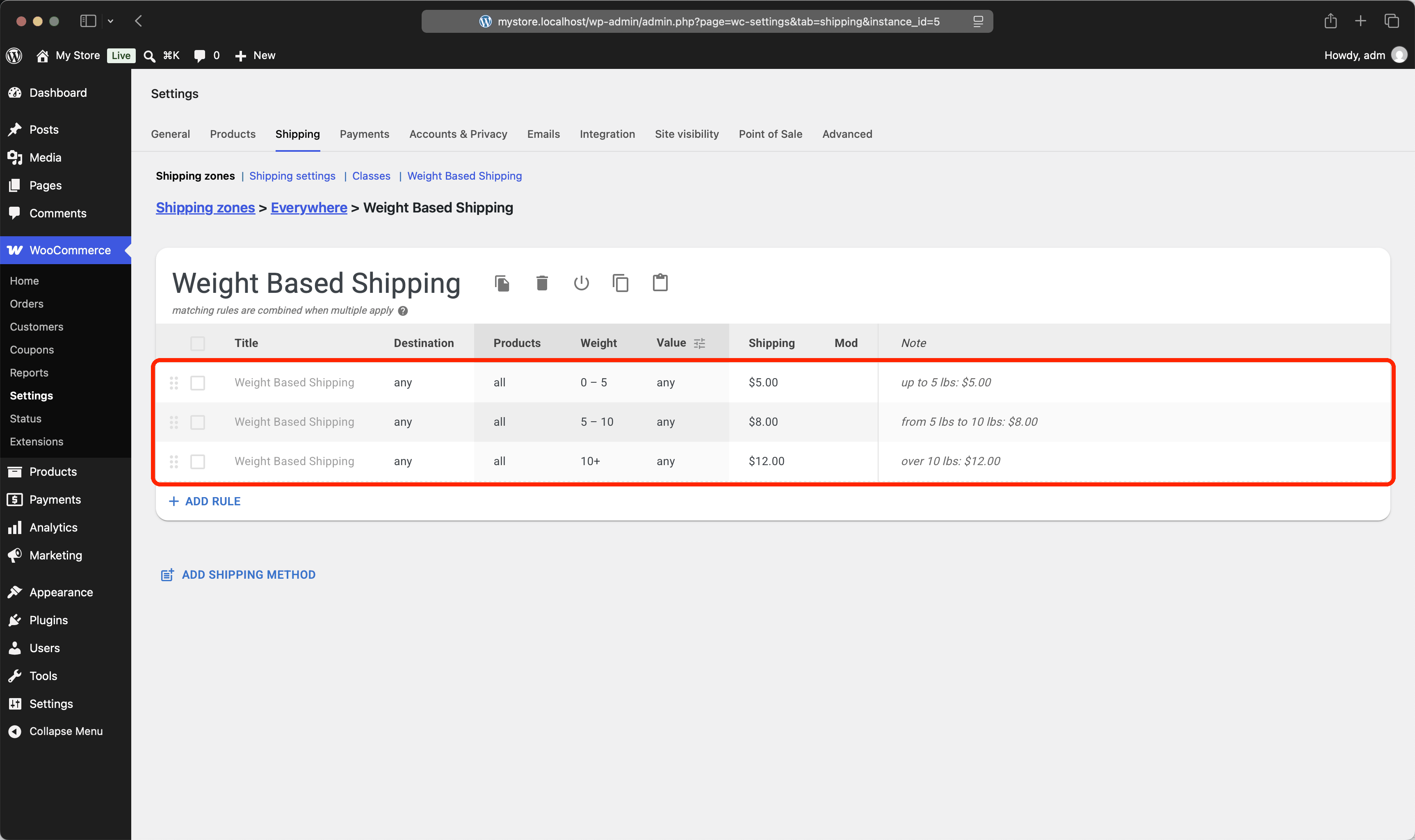
Split the weight scale into brackets and give each one a price: every rule matches its own range of pounds and charges a fixed amount.
Example #1
Cart: 7 lbs.
Result: 7 lbs falls into the 5–10 lbs bracket, so shipping costs $8.00.
Example #2
Cart: 12 lbs.
Result: 12 lbs is over 10 lbs, so shipping costs $12.00.
Scenario B Price per pound
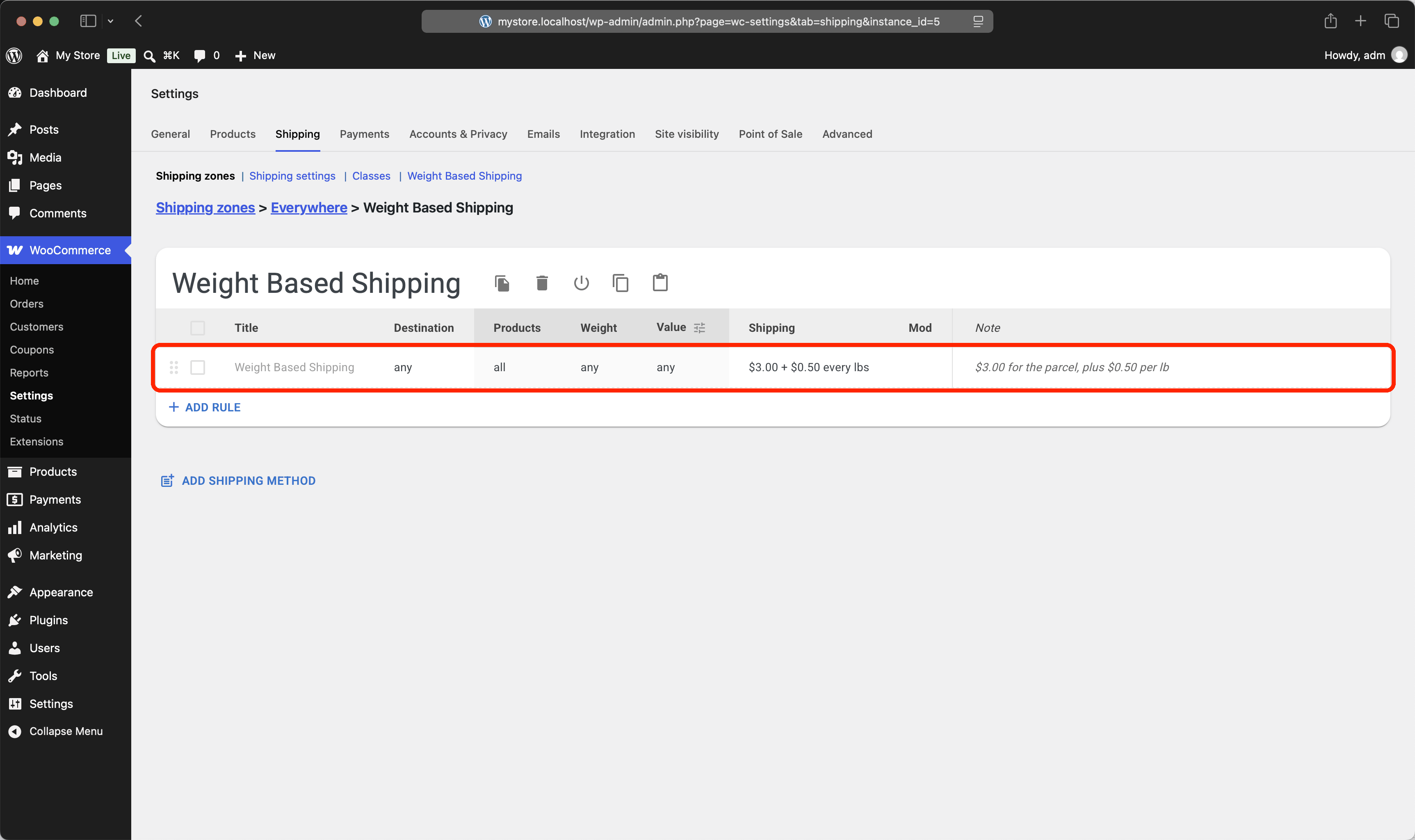
Charge a base price for the parcel plus a fixed amount for every pound in it — a single rule covers any cart weight.
Example #1
Cart: 8 lbs.
Result: $3.00 base + 8 × $0.50 = $7.00.
Example #2
Cart: 20 lbs.
Result: $3.00 base + 20 × $0.50 = $13.00.
Scenario C Brackets plus a per-lb rate
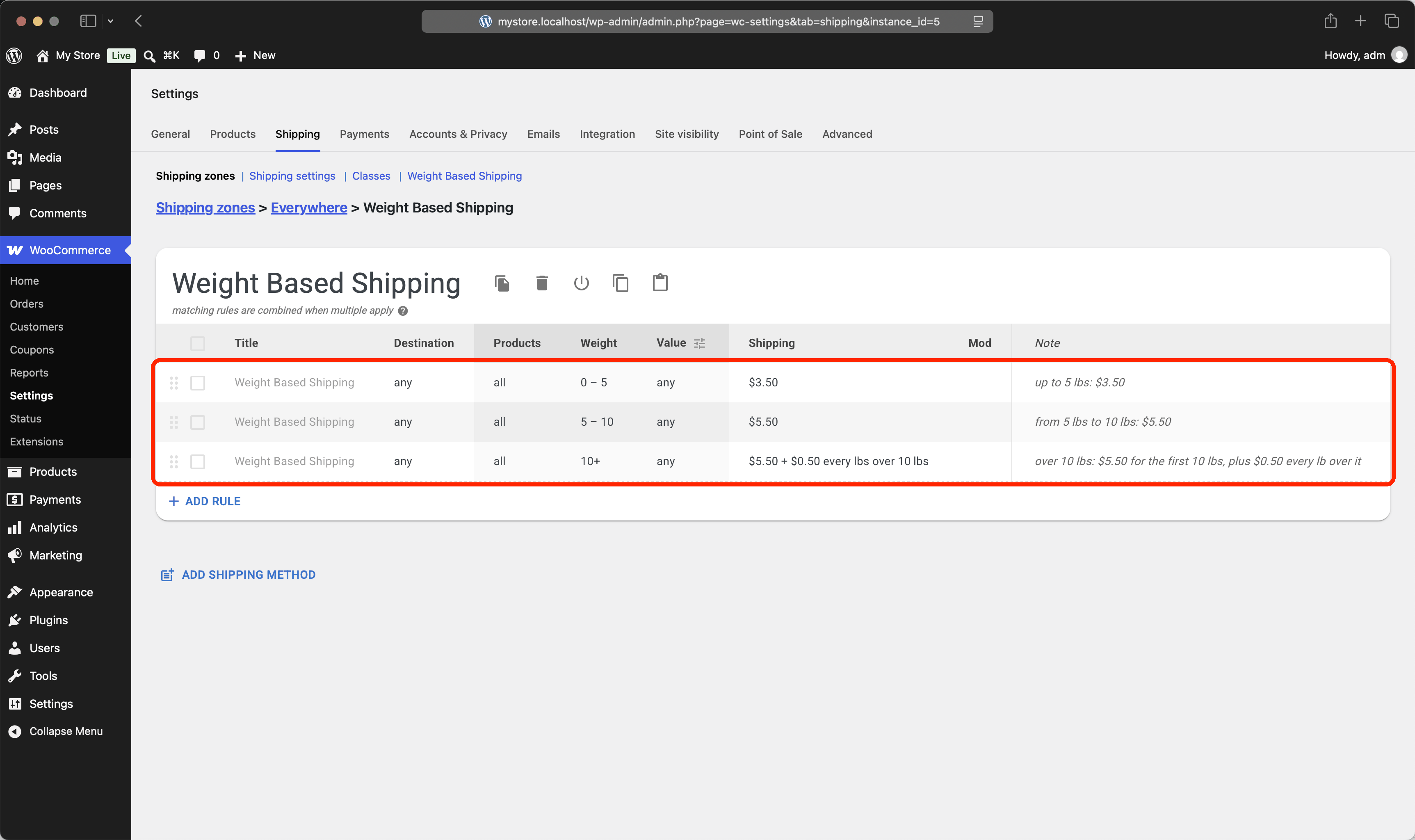
Keep fixed prices for typical parcels and switch to per-pound pricing once the weight leaves the last bracket: the final rule charges its base price for the first 10 lbs, then adds $0.50 for every pound over it.
Example #1
Cart: 8 lbs.
Result: 8 lbs falls into the 5–10 lbs bracket, so shipping costs $5.50.
Example #2
Cart: 16 lbs.
Result: $5.50 for the first 10 lbs + 6 × $0.50 for the rest = $8.50.
Selling lightweight goods with weights in ounces? Nothing changes: set the store weight unit to oz, and the same rules charge per ounce.